
Preventing Sprains in Summer Sports: Play Hard, Stay Safe
Ankle and knee sprains spike every summer sports season — and most are preventable. The warm-up, strength, and landing habits that keep you on the field.
Santosh Singh
Registered Physiotherapist / Director
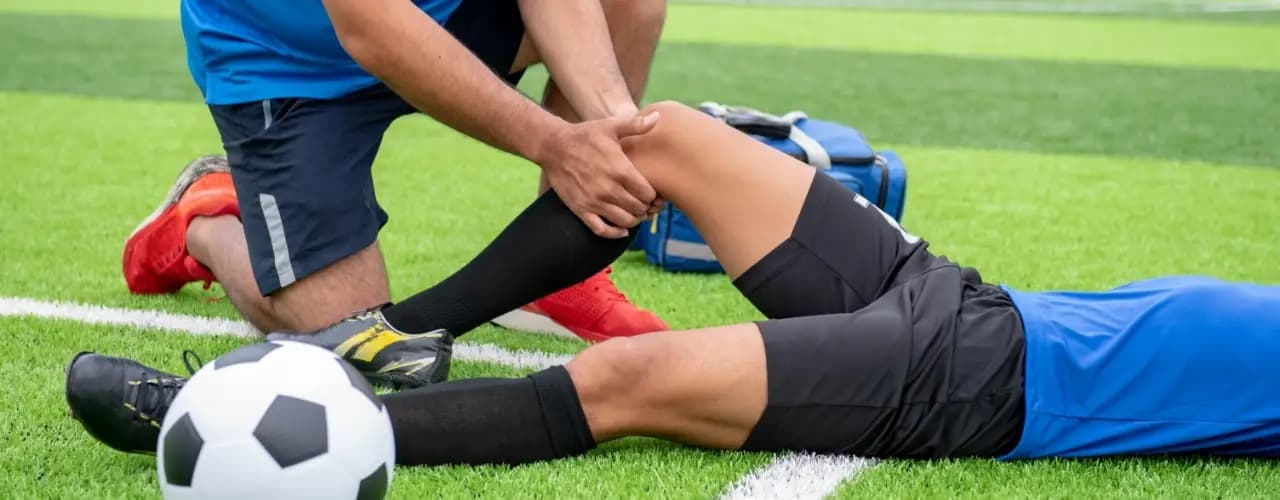
Every summer the same wave rolls through our clinic: soccer ankles in June, slo-pitch knees in July, pickleball everything in August. Sprains feel like bad luck, but the risk factors are measurable and most are trainable. Here's the prevention playbook.
Why sprains happen
A sprain is a ligament stretched past its limit — almost always in a moment the muscles around the joint failed to control: an awkward landing, a sudden cut, a misstep on uneven turf. Three factors dominate the risk:
- A previous sprain — by far the biggest. Unrehabilitated sprains leave behind weakness and dulled position-sense (proprioception) that set up the next one.
- Insufficient strength around the ankle and hip
- Cold starts — first-five-minutes injuries are a cliché because they're real
The 10-minute pre-game routine
Replace static stretching with a dynamic warm-up: two minutes of light jogging, leg swings, walking lunges with rotation, lateral shuffles, A-skips, and a few progressive accelerations. Warm tissue with rehearsed movement patterns sprains dramatically less. Structured warm-up programs in soccer have reduced injuries by a third or more in large studies — ten minutes well spent.
The twice-a-week insurance policy
- Single-leg balance — 30 seconds per leg, eyes open then closed; add head turns as it gets easy
- Calf raises — both legs, then single-leg, building to 15+ controlled reps
- Lateral hops — small, controlled side-to-side hops, sticking each landing
- Hip side-raises or banded walks — hip strength controls what the knee and ankle experience
- Landing practice — jump, land soft and quiet, knees tracking over toes, every time
Gear and field sense
Footwear matched to the surface (cleats for grass, court shoes for hardcourt), laces actually tied, and a quick scan of the field for gopher holes and sprinkler heads — unglamorous, effective.
If a sprain happens anyway
Early protection, then early movement — and a real rehab program, even for "minor" sprains. The rolled ankle you walk off and forget is the one that rolls again in August. Call 587-355-3555 — Nolan Hill Physiotherapy & Massage, NW Calgary, open 7 days a week.
Dealing with pain or an injury?
Our multidisciplinary team is here 7 days a week in Nolan Hill, NW Calgary — with direct billing to most insurers.
Call 587-355-3555Related Articles
More recovery insights from the Nolan Hill team

The Value of Physiotherapy in Sports Injury Recovery and Prevention
Beyond treating the injury in front of them, sports physiotherapists change the trajectory of an athlete's season. Here's where the real value lives.
Santosh Singh
Registered Physiotherapist / Director
Golf Injuries: Common Problems and Solutions
Golf Injuries: Common Problems and Solutions
As golf season gets underway in NW Calgary, aches and injuries can quickly affect your swing. Learn the most common golf injuries and how treatment can help.
Nolan Hill Physio Team
Registered Physiotherapists
Teen Sports Injuries: Prevention and Treatment
Teen Sports Injuries: Prevention and Treatment
Spring sports and training camps can increase the risk of teen injuries. Learn how prevention, early care, and rehab at Nolan Hill Physiotherapy and Massage Clinic can help young athletes recover safely.
Nolan Hill Physio Team
Registered Physiotherapists