
Shockwave Therapy: What to Expect at Your First Session
Booked for shockwave and wondering what you've signed up for? A minute-by-minute walkthrough of your first session — sensation, duration, and aftercare.
Santosh Singh
Registered Physiotherapist / Director
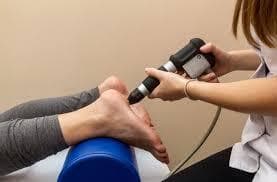
Shockwave therapy has a dramatic name, which makes patients understandably curious — and occasionally nervous — before a first session. Here's exactly how it goes.
Before the device comes out
Your first appointment starts like any good physiotherapy visit: a focused assessment to confirm shockwave is the right tool. It shines for chronic tendon and fascia problems — plantar fasciitis, tennis elbow, Achilles and rotator cuff tendinopathy — that have lingered past three months. If your condition will respond better to needling, loading, or manual therapy, we'll say so.
The treatment itself, step by step
- Locating the target. Your clinician palpates to find the precise zone of maximal tenderness — shockwave works best delivered exactly there.
- Gel application. A conductive gel goes on, the same as for an ultrasound.
- Delivery. The applicator head rests on the area and delivers rapid acoustic pulses — typically about 2,000-3,000 of them over three to five minutes per area. It feels like a fast, firm tapping, deep in the tissue.
- Intensity tuning. We start moderate and adjust. Effective treatment sits at "strong but tolerable" — you'll feel it, and you can absolutely breathe through it. You're in control the whole time.
The shockwave portion itself usually takes under ten minutes inside a normal treatment visit, which also includes the exercise and hands-on components of your plan.
Afterward
- Expect mild soreness or warmth over the area for a day or two — that's the intended biological stimulus at work
- Skip anti-inflammatories if you can; the controlled inflammation is part of how shockwave restarts healing
- Keep moving normally, but hold off on maximal loading of the area for about 48 hours
- Most plans run 3-6 sessions, one week apart, with improvement often continuing for weeks after the last one
Will it work?
For the right conditions, the research is encouraging — success rates around 70-80% for chronic tendinopathies, with some shoulder conditions higher still. Combined with progressive loading exercise, which we always pair it with, your odds are better again.
Curious whether your stubborn tendon qualifies? Call 587-355-3555 — Nolan Hill Physiotherapy & Massage, NW Calgary, direct billing available.
Dealing with pain or an injury?
Our multidisciplinary team is here 7 days a week in Nolan Hill, NW Calgary — with direct billing to most insurers.
Call 587-355-3555Related Articles
More recovery insights from the Nolan Hill team
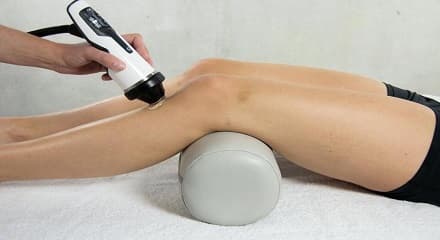
Shockwave Therapy in NW Calgary: Conditions, Results & Candidacy
Which injuries respond best to shockwave, what results the research supports, and how to know if you're a good candidate.
Santosh Singh
Registered Physiotherapist / Director
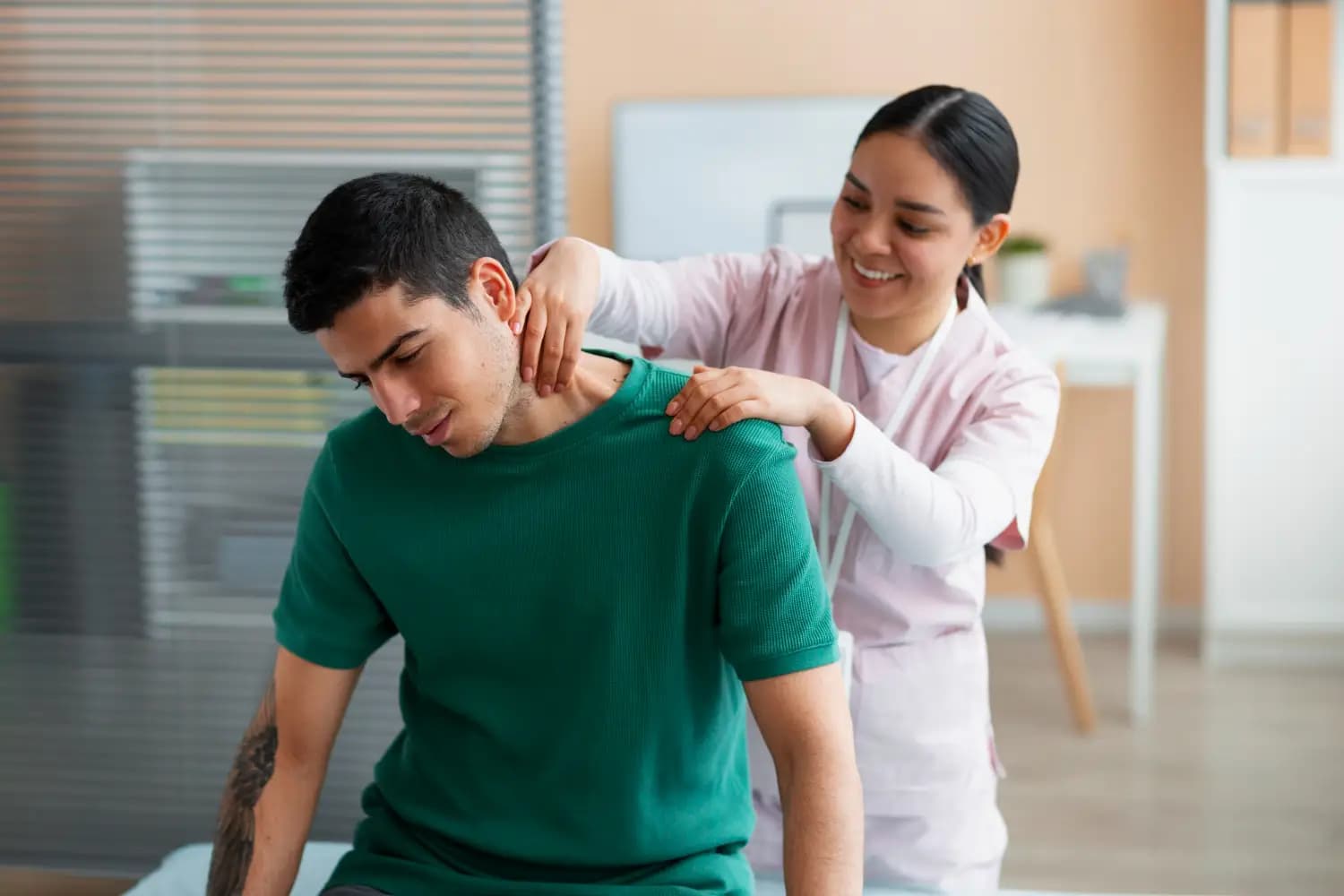
Manual Therapy Techniques for Chronic Pain
When pain has persisted for months or years, hands-on treatment plays a different role — calming a sensitized system while exercise rebuilds trust in movement.
Santosh Singh
Registered Physiotherapist / Director
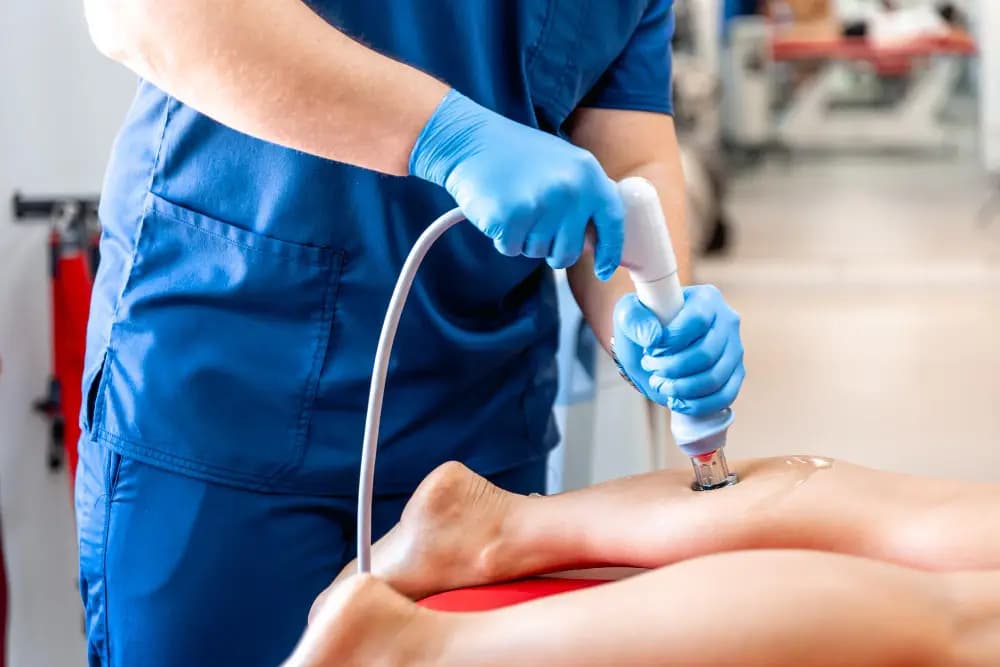
Laser Therapy for Arthritis: A Non-Invasive Option
For arthritic joints too sensitive for firm hands-on work, cold laser offers a painless way to calm inflammation and support exercise therapy.
Nolan Hill Physio Team
Registered Physiotherapists