
The Role of Physiotherapy in Managing BPPV
Medication can't move crystals. Physiotherapy is the definitive treatment for BPPV — here's why it works, what a visit looks like, and what to expect afterward.
Santosh Singh
Registered Physiotherapist / Director

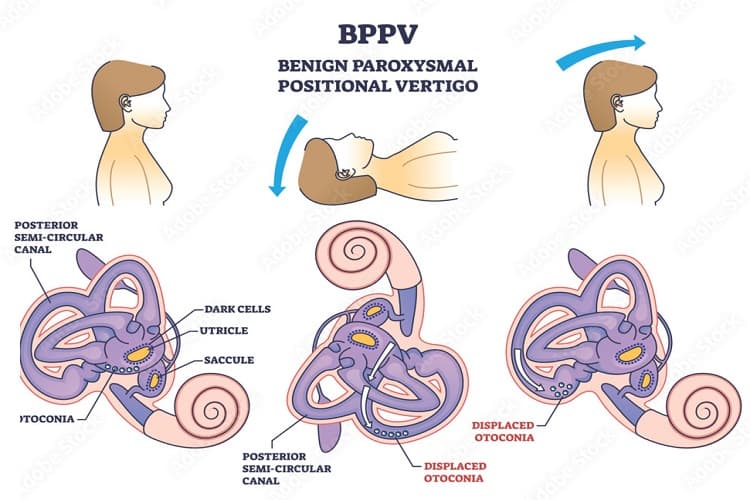
BPPV — benign paroxysmal positional vertigo — is a mechanical problem. Tiny calcium carbonate crystals, normally embedded in one chamber of your inner ear, break loose and drift into the semicircular canals that sense head rotation. Every time your head changes position, the crystals tumble, the canal fires falsely, and the room spins.
Because it's mechanical, the fix is mechanical. And that's precisely physiotherapy's territory.
Why medication isn't the answer
Anti-dizziness medications can blunt nausea, but they don't touch the cause — the crystals stay where they are. Worse, long-term use suppresses the very vestibular signals the brain needs for recovery and adds sedation and fall risk on top. Guidelines are clear: repositioning maneuvers, not medication, are the treatment for BPPV.
What a physiotherapy visit looks like
- History — when the spinning happens (rolling in bed, looking up, bending forward), how long it lasts (typically under a minute), and what came before it
- Screening — ruling out other causes of dizziness that need different care, and checking the neck for safe positioning
- Positional testing — brief, controlled positions while we watch your eye movements identify the affected canal and side
- Treatment, same visit — the appropriate repositioning maneuver (Epley, Semont, or BBQ roll) guides the crystals back home
Most patients improve dramatically within one to three sessions. It's one of the highest success-rate treatments in musculoskeletal and vestibular care.
Physiotherapy's role beyond the maneuver
- Residual unsteadiness — gaze stabilization and balance exercises clear the lingering "off" feeling
- Recurrence management — BPPV returns in roughly a third of people over the years; knowing the early signs gets you treated within days, not months
- Falls prevention — particularly for older adults, pairing crystal repositioning with strength and balance training protects against the real danger of vertigo
Don't wait it out
BPPV sometimes resolves on its own — eventually — but weeks of spinning, anxiety, and movement avoidance take a real toll, and untreated episodes raise fall risk. One assessment can usually start the fix the same day. Call 587-355-3555 — Nolan Hill Physiotherapy & Massage, open 7 days a week in NW Calgary.
Dealing with pain or an injury?
Our multidisciplinary team is here 7 days a week in Nolan Hill, NW Calgary — with direct billing to most insurers.
Call 587-355-3555Related Articles
More recovery insights from the Nolan Hill team

Vertigo Management: A Comprehensive Approach
Not all vertigo is BPPV, and not all dizziness is vertigo. A comprehensive framework for diagnosing and managing the spinning, swaying, and unsteady.
Santosh Singh
Registered Physiotherapist / Director

A Guide to Vestibular Rehabilitation: Regain Balance and Confidence
When your balance system misfires, the world stops feeling trustworthy. How vestibular rehab retrains the brain to steady itself — step by step.
Santosh Singh
Registered Physiotherapist / Director
Physiotherapy for BPPV in Older Adults: Challenges & Solutions
Positional vertigo becomes more common — and more dangerous — with age. Here's how physiotherapy safely treats BPPV in older adults, even with mobility limitations.
Santosh Singh
Registered Physiotherapist / Director