
Home Exercises in Treating BPPV: What Helps and What to Avoid
Can you treat positional vertigo at home? Sometimes — but only after a proper diagnosis. Here's the honest guide to home exercises for BPPV.
Santosh Singh
Registered Physiotherapist / Director
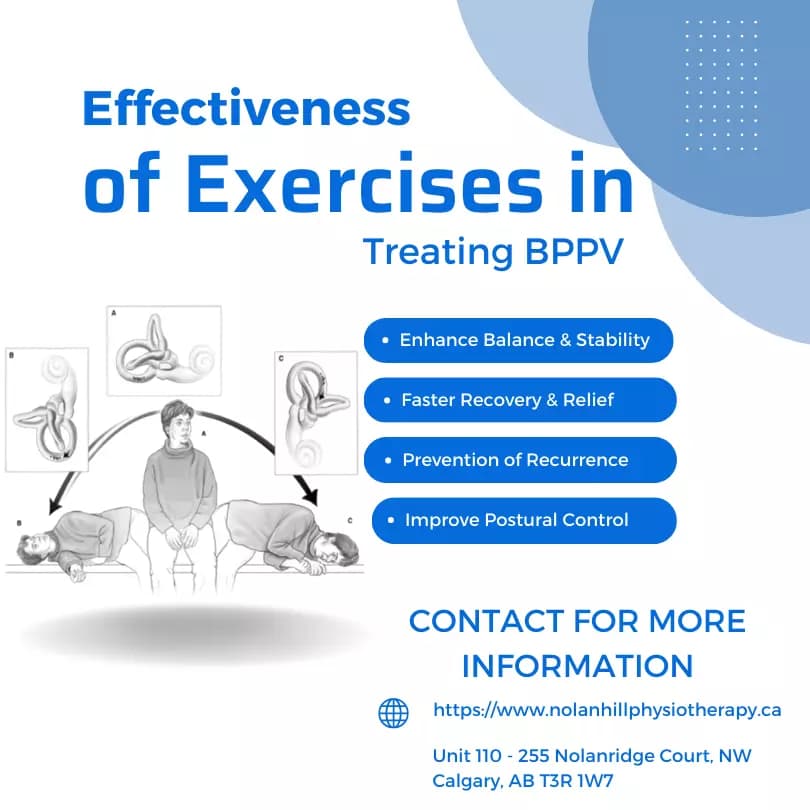
Search "vertigo exercises" and you'll find hundreds of videos promising relief. Some of them genuinely help. Some waste weeks. A few make things worse. Here's how to tell the difference.
The critical first step: diagnosis
BPPV treatment is canal-specific. The famous Epley maneuver treats the posterior canal on a specific side — it does nothing for horizontal-canal BPPV, and doing it on the wrong side accomplishes nothing. Worse, not all dizziness is BPPV at all; vestibular neuritis, migraine-related dizziness, and cervicogenic dizziness each need entirely different care.
That's why the smart sequence is: one professional assessment first, home program second. Positional testing takes minutes and tells us exactly which canal and side is involved — then home exercises become targeted instead of guesswork.
Home exercises that earn their place
- Home Epley maneuver — once your physiotherapist confirms posterior-canal BPPV and teaches you the side-specific sequence, the home Epley is an effective tool for managing recurrences early
- Brandt-Daroff exercises — a gentler series of side-lying repetitions; less effective than canal-specific repositioning, but useful for habituation and for residual sensitivity after successful treatment
- Gaze stabilization — focusing on a fixed target while turning the head side to side; rebuilds the reflex that keeps vision steady and clears that lingering "off" feeling
- Progressive balance practice — narrow stance, then tandem stance, then standing eyes-closed near a counter; restores confidence safely
What to avoid
- Repeating maneuvers many times daily — more is not better, and constant provocation keeps the system irritated
- Doing repositioning maneuvers with an unstable neck, recent head injury, or symptoms like double vision, slurred speech, or limb weakness — those need medical assessment, not exercises
- Simply avoiding all movement — it feels safer but delays recovery and deconditions your balance system
The bottom line
Home exercises are an excellent part of BPPV care — after diagnosis, with the right technique, on the right side. Our vestibular-trained physiotherapists will treat the acute episode and equip you with the exact home program for your pattern. Call 587-355-3555 — open 7 days a week in NW Calgary.
Dealing with pain or an injury?
Our multidisciplinary team is here 7 days a week in Nolan Hill, NW Calgary — with direct billing to most insurers.
Call 587-355-3555Related Articles
More recovery insights from the Nolan Hill team

Vertigo Management: A Comprehensive Approach
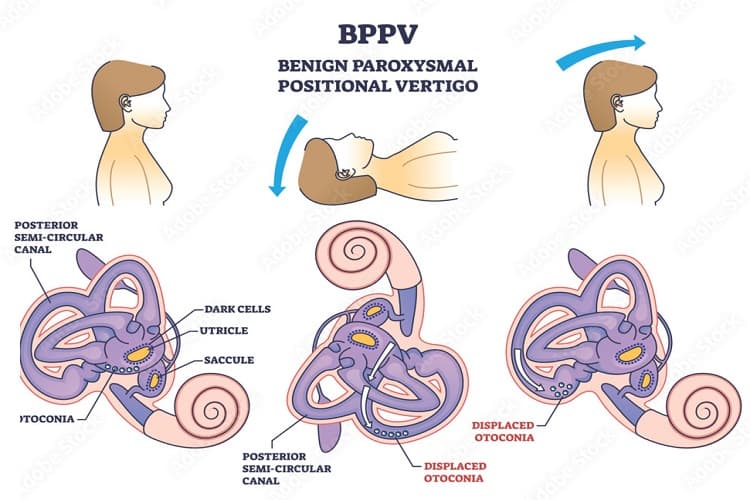
Not all vertigo is BPPV, and not all dizziness is vertigo. A comprehensive framework for diagnosing and managing the spinning, swaying, and unsteady.
Santosh Singh
Registered Physiotherapist / Director
Physiotherapy for BPPV in Older Adults: Challenges & Solutions
Positional vertigo becomes more common — and more dangerous — with age. Here's how physiotherapy safely treats BPPV in older adults, even with mobility limitations.
Santosh Singh
Registered Physiotherapist / Director
Rehabilitation Techniques for BPPV Management
Rehabilitation Techniques for BPPV Management
From the Epley maneuver to habituation training, these are the rehabilitation techniques physiotherapists use to resolve positional vertigo and restore steady balance.
Santosh Singh
Registered Physiotherapist / Director